
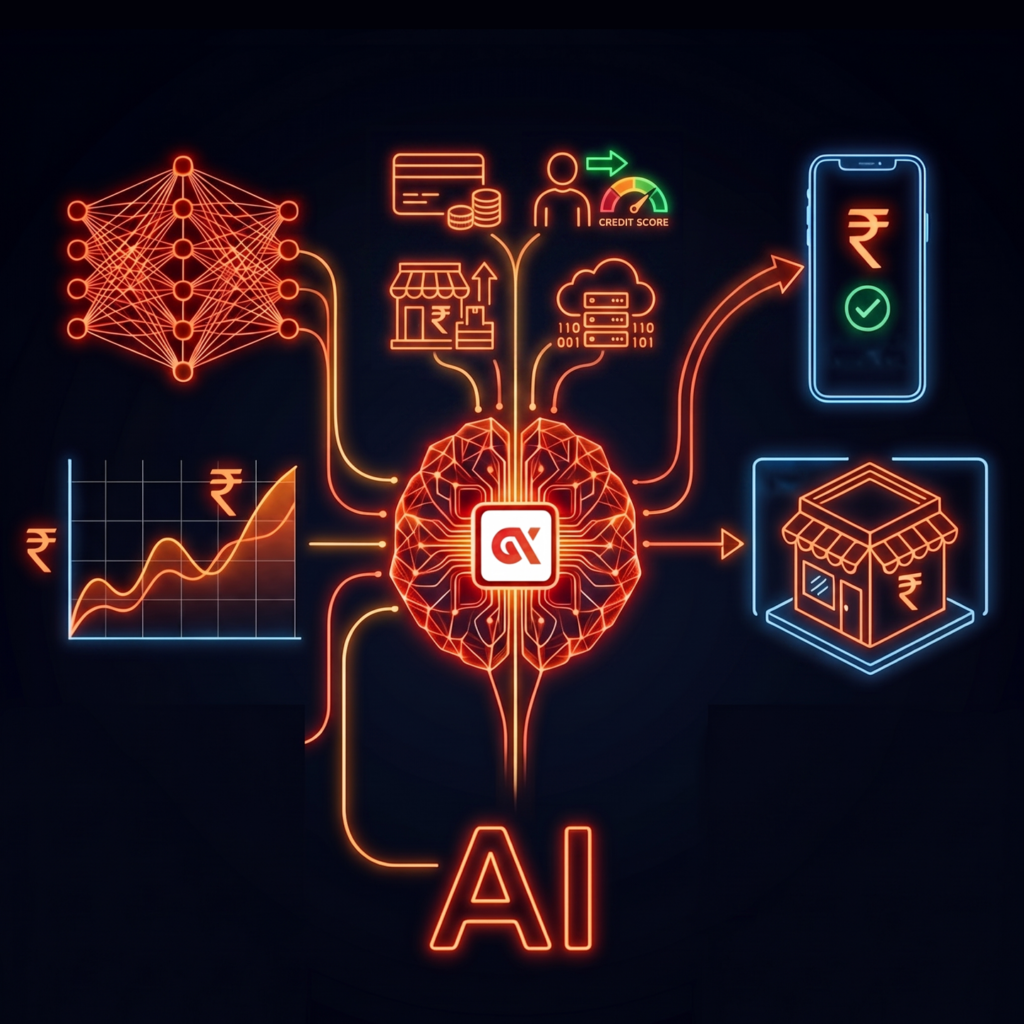
AI in financial services is moving beyond prediction. It is increasingly helping systems understand, interpret and act on information.
Machine learning has already been part of financial services for years, supporting use cases such as credit assessment, fraud detection and portfolio risk monitoring. The emergence of GenAI adds a new dimension, enabling systems to work with information and context in ways that complement these existing capabilities.
As an embedded finance platform serving MSMEs through digital ecosystems, GROx operates at the intersection of technology, data and digital lending. Predictive AI already forms an important part of how we assess creditworthiness and monitor portfolio risk. Our machine learning models generate early warning signals that help identify customers whose risk profiles are beginning to deteriorate, enabling a more proactive approach to portfolio management.
But not every problem in financial services is a prediction problem. Some require systems to verify identity, understand unstructured information or help people make sense of complex data. This is where the next phase of our AI roadmap comes in.
Aligning AI Capabilities with Business Needs
AI in lending has evolved beyond a single use case. Different forms of AI can address different stages of the lending journey, from assessing risk and verifying identity to interpreting information and supporting operational teams.
At GROx, we are building on these existing capabilities by exploring how different forms of AI can work together across the lending journey. This includes using AI not only to assess risk or verify information, but also to interpret data, surface relevant insights and support teams in making better-informed decisions. This means intelligence can continue to add value beyond the initial credit decision, helping teams understand customers, portfolios and information across the lending lifecycle.
Building Trust with Computer Vision
Risk assessment is only one part of digital lending. Establishing customer identity is another critical component of the digital onboarding journey.
Our in-house computer vision capabilities support customer identity verification through selfie-to-KYC image matching. This allows visual information to be analysed as part of the verification process, adding another layer of intelligence to digital onboarding.
While our existing AI capabilities help assess risk, computer vision addresses a different problem: helping establish that the identity being presented during onboarding matches the relevant KYC information.
Together, these capabilities demonstrate why we see AI as a set of complementary technologies rather than a single solution.
From Structured Data to Unstructured Information
Traditional machine learning models work particularly well with structured data, where information can be organised into defined data points. As we expand our AI capabilities, we are also exploring how systems can work with information that is less structured but still carries valuable context.
Customer-provided information, financial records, transaction narratives and customer communications are examples of information that can provide additional context beyond structured data.
This is where GenAI can add another layer of intelligence. As part of the next phase of our AI roadmap, we are exploring how GenAI can complement our existing AI capabilities. By helping systems extract and interpret this context, it builds a more holistic understanding of customer financial behavior.
This unlocks potential applications across customer onboarding, risk assessment, portfolio analysis, enhanced customer experiences, and targeted marketing.
From Optical Character Recognition (OCR) to Document Intelligence
Documents are another example of information that contains value beyond the text itself.
Traditional OCR can extract text from a document, but understanding the context of that information requires another layer of intelligence. We are currently developing a document intelligence platform that goes beyond OCR by understanding document context, extracting relevant information and summarising key content.
The aim is to make document-heavy processes more efficient for operational teams, particularly when reviewing customer and compliance documentation. Instead of relying entirely on manual review to locate and interpret relevant information, document intelligence can help surface what matters and reduce repetitive effort.
Looking ahead, we see opportunities to build AI copilots that help employees retrieve policies, explain model outputs, and streamline compliance workflows, all while keeping critical decisions under human oversight.
Making Intelligence Consumable
The biggest near-term opportunity for GenAI may not be replacing the AI models that already work. It is making the intelligence produced by those systems easier to understand and use.
A risk model can surface a signal, computer vision can help establish identity, and document intelligence can surface relevant information from complex documents. GenAI can help interpret this information, reduce manual effort and make relevant insights more accessible across the lending journey.
This reflects the direction in which we see AI evolving at GROx: from predicting risk to understanding context and making intelligence more actionable.
Keeping Human Oversight at the Centre
Our approach is to use AI to augment existing systems and human expertise, rather than position it as a replacement for critical judgement. It can help identify patterns, interpret information, surface relevant knowledge and reduce repetitive effort, while critical decisions continue to require appropriate human oversight.
The value is not simply in automating a task. It is in helping people access better information and make faster, better-informed decisions.
Explore the Future of Embedded Finance with GROx
Discover GROx’s embedded finance solutions and learn how we are using technology, data and intelligence to shape the next generation of embedded lending for MSMEs.